Exhibition Text — It is everywhere, 2023
It is everywhere
Shin Hee Won (Gallery Doll Curator)
A work of art always leaves something behind. What appears concrete gradually becomes ambiguous, for it is ultimately a result of individual thought rather than a fixed substance. In the course of lived reality, there are moments when precise memories disappear, leading us toward other thoughts. Living in a present that cannot be clearly defined as “this is it,” we come to consider contemporary art in relation to everyday life. To encounter and appreciate works from the perspective of today, rather than yesterday, is both pleasurable and intriguing, yet it also calls for a kind of understanding that resists easy definition.
Rather than placing meaning simply on the act of seeing, the process of thinking about the stories beyond observation has become a necessary attitude in approaching art today. To come to know something is an infinite process. Since another person’s thoughts, or a latent unconscious, may one day naturally surface, even a realistic form cannot be viewed simply as it appears. The vivid sensation conveyed by a form that has emerged outward, even when it is not concrete, is one aspect of today’s art. In the process through which an artwork comes into being, there is a point at which the artist’s thoughts connect with everyday life. Living in the present may seem to pass by simply, but a perspective in progress can never be fixed. Within the realm of existence, the vision of a creator is inevitably delicate. Since the sensitivity with which one feels and receives something becomes the work, it must find empathy within the space of “anyone,” while also being recognized as a distinct story. What matters is the extent to which communication can take place. There must be emotion, and there must also remain room for imagination. In the end, a work of art is something that discovers something within the repeated routines of everyday life and gives it meaning.
With an affectionate gaze, I would like to look at the works of the present. This exhibition brings together Soonhow and Cho Eunjoung, two artists who have developed two-dimensional works in which the thoughts of the creator are compressed into form. Through their works, we are invited to consider what becomes a work of art, and to reflect once again on painting itself.
Nature exists within Soonhow’s work. Although it is an object of observation encountered constantly, it is not placed on the plane as concrete representation. Her work is an abstraction completed through layers of paint, recalling nature as interrelated realities sprout and circulate at the boundary of death. She approaches her work while thinking of a day connected to the inner self. The process itself — becoming blurred, deepening, seeping in, and appearing again as brushstrokes — becomes form, and the plane reveals itself. There is no fixed definition of what it is. Yet because the act of creation presupposes individual thought, everyday life is important to the artist. Even when nothing particularly special occurs, a perspective projected onto nature appears on the plane as an attitude that sustains life. What was it that could be confirmed through years of observing the nature of Jeju Island? The flow of time may present a certain framework, yet to live each day is also to discover something unfamiliar in unexpected places. Feelings that cannot be explained in words, and at times even joy, appear as abstraction. A texture that was once soft gradually becomes firm, and the color within the plane grows intense. The texture of oil paint leads us to imagine what cannot be seen through what is visible.
She presents nature remembered through the whole body on the plane. Like the residue of the unconscious that becomes visible one day, a visual language that seems like landscape yet refuses direct representation connects her work to painting today. The energy of quantum mechanics — generated by waves of particles that cannot be discovered by the eye, and suggesting matter as a form of mutual circulation — has led artists to express shapes of sensibility that emerge condensed as thought rather than as external appearance. There is a desire to confirm what is unseen, even though it cannot be seen. Soonhow’s work contains an effort to capture both macroscopic and microscopic flows at once. How far can human imagination reach? What else will science discover? Questions and thoughts continue to unfold. What is clear is that the work the artist has pursued has emerged from her personal everyday life, yet the layers of paint within the plane are supported by the vastness of nature and by the common knowledge offered by contemporary physics. When changes in matter, carried out through human free will, exert influence and enter the world, it is natural that they become artworks through the artist’s insight.
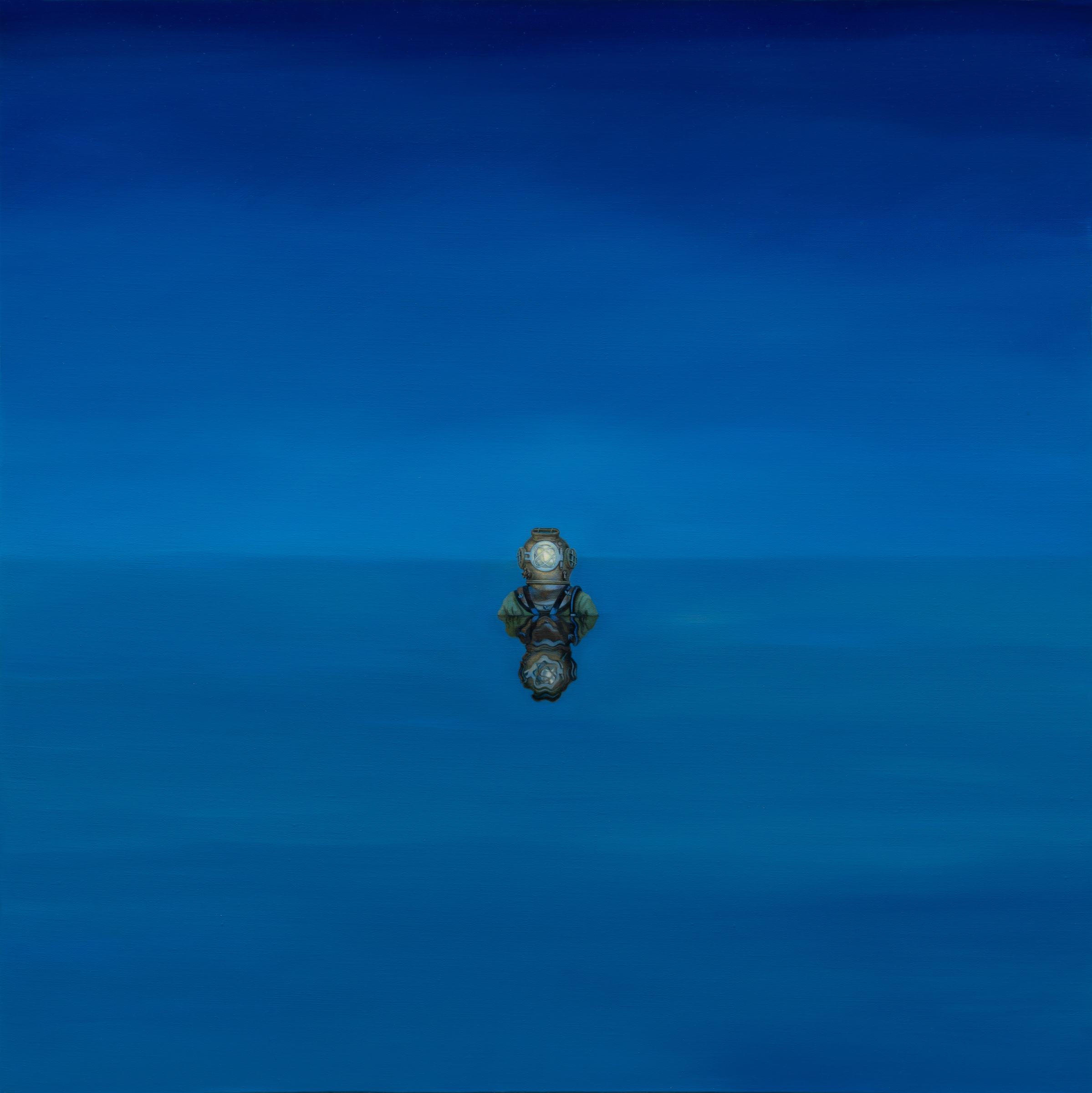
Cho Eunjoung’s paintings are grounded in the observation of objects. Around nature, architecture appears, and figures are staged in natural harmony with it, revealing something within the category of landscape. Observation is important in her paintings. Within symbolic metaphors, objects create stories inside the artist’s subjective gaze, as if a novel were being written. Rather than being mixed together in a deliberately heterogeneous way, they harmonize within the landscape. Based on deep colors, her paintings are beautiful; yet when they seem dark and serious, something humorous appears through a perspective that refuses to remain fixed. Paintings whose atmosphere becomes vivid and then soon subdued are expressed through a sense of boundary. Representation becomes a story of reality and what lies beyond it, subtly conveying the feeling that the boundary is not far away. Scenes are formed at moments of choice — of things that may or may not have happened. Through emotions that were experienced yet remained hidden before emerging, the process of overcoming anxiety is expressed by way of the surreal. In Lake at Night, is the airplane landing, or is it preparing to fly? Has the figure of the diver found composure at the center of the canvas? Nothing is certain. A sense of inner balance may be temporarily restored, yet it is unsettled again when another object enters the scene.
When we think about it, contemporary art itself is a continuation of conflicts. Before an individual’s everyday life arrives as an artwork, history has brought politics and art together, causing objects to overflow as codes within culture. “This is not a pipe.” The paradox within Magritte’s work brought a new current to the way artists observe objects. As an occasion to move beyond the limits of cognition, the creator’s thought deepens. In search of something that can be conveyed more realistically and more certainly, representation meets stories beyond reality and becomes a new genre. The difficulty of contemporary art, with no fixed categories and no correct answers, comes from here. The artist’s paintings are landscapes completed as the delight of representation, where reality and fantasy meet at the point between the realization of dreams and the limits of desire, and where this meeting comes into harmony with reality. In a world where today’s decisions may change tomorrow, how much of reality can an individual truly confirm while living? Art reveals such dissatisfaction and becomes a work. Even if it is turned away from, it hopes to communicate someday.
The artist dreams through painting. In conclusion, thoughts that seem to settle as “this is it,” yet soon shift into another character, are compressed and become form. Rather than asking where one’s values lie, the work confirms life as it continues naturally, as it is.
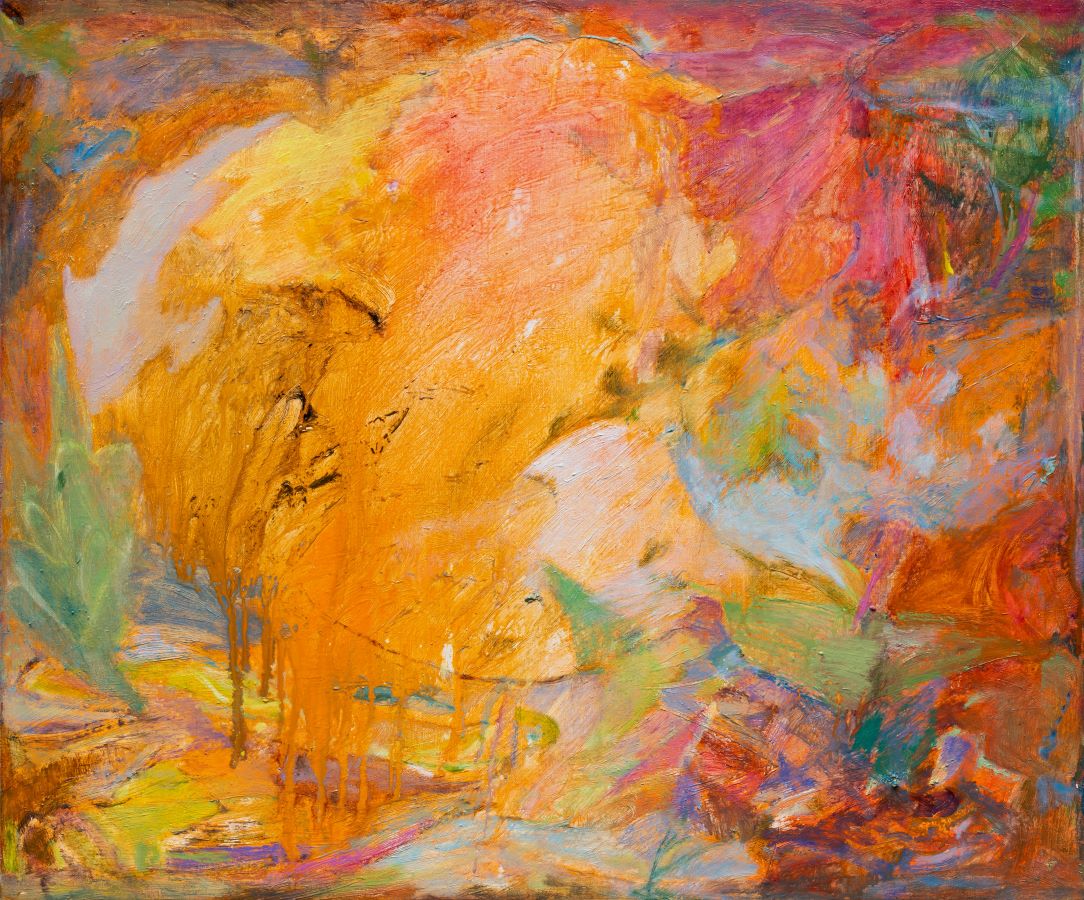
순호 Leaves spill_oil on canvas_60.6x72.7cm_2023
조은정_밤의 호수 Lake of the Night_2023_Acrylic, Oil on canvas, 91 x 91 cm (50S)
'Texts > Critical Texts' 카테고리의 다른 글
| Exhibition Text — Orbit, 2026 (0) | 2026.08.06 |
|---|---|
| Exhibition Text — Encounter, Two Visions, 2024 (0) | 2024.11.13 |
| Exhibition Text — Unfamiliarly Glittering, 2022 (0) | 2023.01.12 |
| Exhibition Text — The Desire to Communicate in an Age Incapable of It, 2019 (0) | 2019.09.26 |
| Critical Text — Dual Conditions of Human Existence, 2016 (0) | 2019.09.13 |